Proof at a Glance
- Two participation periods: 2024.02-2024.04 and 2024.09-2025.03
- Vision and spectral data used separate preprocessing and result-handling flows
- Development work and project coordination were handled together
- Internal screens, datasets, partner names, exact project documents, model internals, and performance numbers are not disclosed.
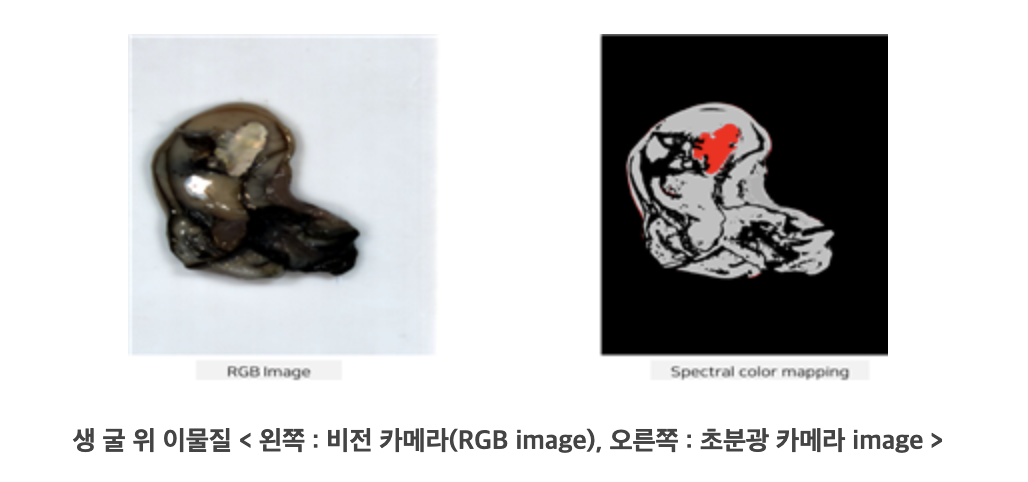
- The cover is an attributed public BKI reference, not an internal product screen or proof of model performance.
Work flow
Structure and Flow
- 01Camera Input
Vision and spectral cameras produced different types of inspection data.
- 02Preprocessing
Used OpenCV where applicable and implemented the spectral flow from vendor documentation and its provided library.
- 03AI Result Handling
Postprocessed YOLOv5/v8 and separate spectral-model outputs.
- 04Data Conversion
Converted processed results into byte and data payloads for delivery.
- 05API and Browser
Delivered results through an API so they could appear in a browser in near real time.
- 06Coordination
Handled reports, field trips, schedules, requirements, and communication.
30-Second Summary
The Marine Food Inspection Program used vision and spectral camera data as part of an AI-assisted inspection flow.
I worked as Developer & Project Coordinator. I implemented data preprocessing and AI result postprocessing, converted processed results for delivery, and sent them through an API so they could be shown in a browser in near real time. I also handled reports, field trips, schedules, requirements, and communication with the project team.
This page stays within the confidentiality boundary. It does not publish internal screens, datasets, partners, model internals, or performance numbers.
Context
Vision-camera data and spectral-camera data are not the same. Each input needs its own preprocessing path before it can enter an AI model. The result also needs more work before a browser can display it.
The practical system flow was:
camera data
-> preprocessing
-> AI model input
-> result postprocessing
-> byte/data conversion
-> API delivery
-> browser display
The Problem
- Vision and spectral inputs required different preprocessing flows.
- Raw model output was not ready for browser display.
- Result data had to be converted and delivered through an API in near real time.
- Development, field work, requirements, reports, and schedules had to move together.
My Responsibility
My role covered both implementation and project coordination.
- Implemented vision-camera preprocessing with OpenCV where applicable.
- Passed processed vision data into YOLOv5 and YOLOv8 flows.
- Postprocessed object-detection outputs for later delivery and display.
- Read vendor documentation for the spectral camera and used the provided library to implement its preprocessing flow.
- Postprocessed outputs from the separate spectral AI flow.
- Converted processed results into byte and data payloads.
- Built the API delivery flow for near-real-time browser display.
- Wrote reports and organized technical documents.
- Coordinated requirements, schedules, field trips, and communication.
What I Built
Vision-camera flow
I used OpenCV where it fit the vision preprocessing work. The processed data entered YOLOv5 or YOLOv8. I then handled the output so detection results could move to the next system step instead of staying as raw model data.
Spectral-camera flow
The spectral input required a different approach. There was no simple general-purpose path for the required preprocessing, so I read the camera vendor’s documentation and used its provided library to implement the flow. I also handled the output from the separate spectral AI process.
Result conversion and API delivery
Model outputs were not directly usable by the browser. I postprocessed the results, converted them into byte and data payloads, and delivered them through an API for near-real-time browser display.
Project coordination
I did not only handle development tasks. During the later participation period, I also coordinated project work: reports, requirements, field trips, schedules, and communication with the people involved.
Key Decisions
Keep the two camera flows separate
Vision and spectral data have different structures and preprocessing needs. I treated them as separate input paths and connected them only after their results were ready for delivery.
Design for the browser, not only the model
An AI output becomes useful only after another system can receive and explain it. I worked backward from the browser-delivery requirement and organized postprocessing and data conversion around that goal.
Keep public claims inside the NDA boundary
The website explains my responsibility and the system flow. It does not expose internal documents, customer or partner names, datasets, exact model details, screenshots, or performance numbers.
Evidence
- I participated in the project during two periods: 2024.02-2024.04 and 2024.09-2025.03.
- The vision and spectral paths used separate preprocessing and result-handling flows.
- My work covered implementation, API/browser delivery, reports, requirements, schedules, and field coordination.
What This Project Shows
- I can learn an unfamiliar device and data flow from technical documentation.
- I can connect preprocessing, AI output, postprocessing, data conversion, API delivery, and browser display.
- I can handle development and project coordination together in a small-team environment.
- I understand how to explain confidential work without exposing protected information.
Retrospective
This project taught me that an AI result is only one part of a working product. The input flow, output handling, API delivery, browser display, documents, and schedule all have to connect.
It also gave me experience taking responsibility across both code and coordination when the team needed one person to cover more than one boundary.